
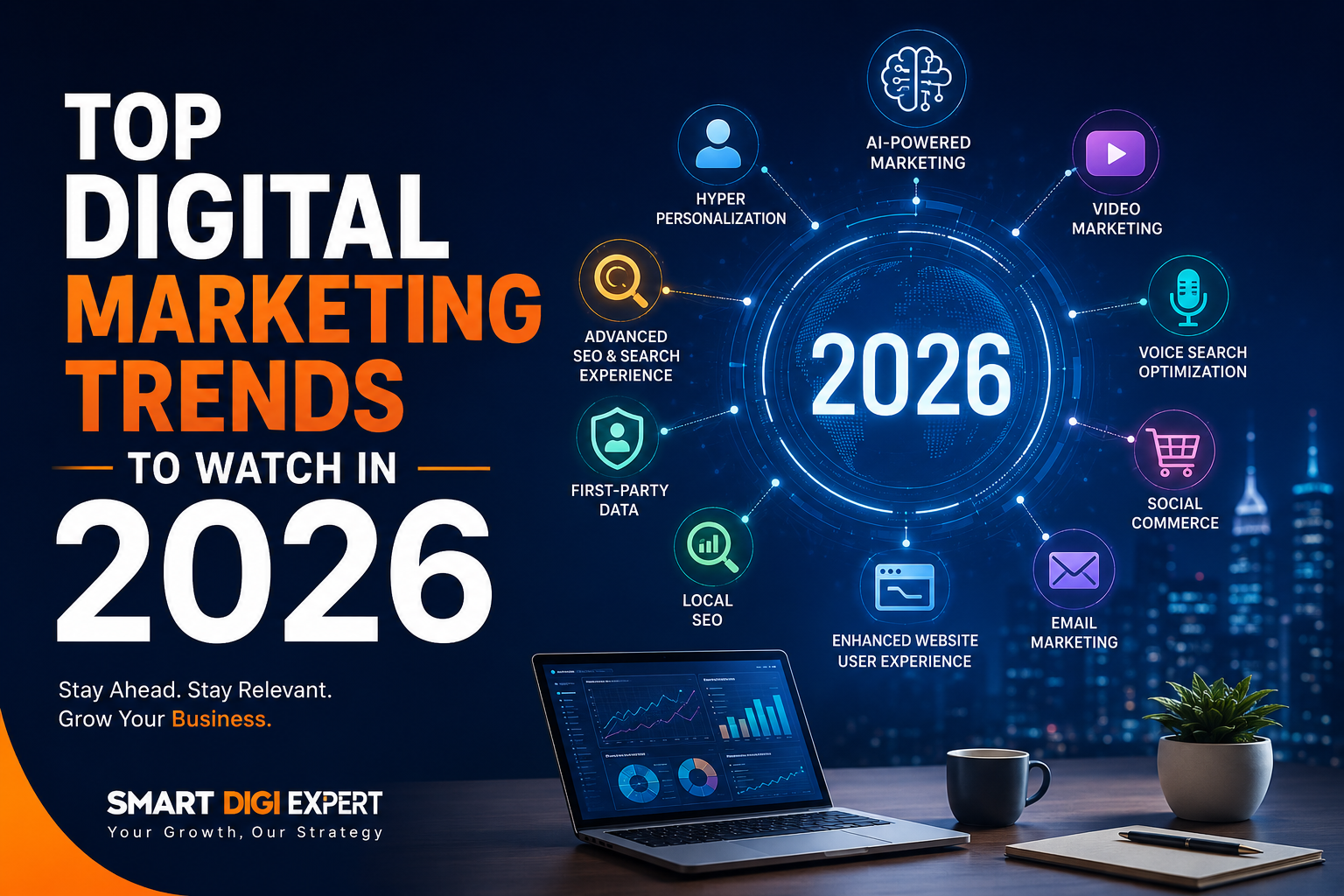
The digital marketing landscape is evolving faster than ever. New technologies, changing consumer behavior, and frequent search engine updates mean businesses must continuously adapt to remain competitive. In 2026, success is no longer about simply having a website or posting on social media—it’s about creating personalized, data-driven, and customer-focused experiences across every digital channel.
Whether you’re a startup, local business, or established brand, understanding the latest digital marketing trends can help you attract more customers, improve conversions, and build long-term growth.
Let’s explore the most important digital marketing trends shaping 2026.
1. Artificial Intelligence (AI) Becomes a Marketing Essential
Artificial Intelligence is no longer just a buzzword—it’s becoming a core part of modern marketing strategies.
Businesses are using AI to:
- Generate high-quality content
- Create personalized email campaigns
- Analyze customer behavior
- Improve customer support through AI chatbots
- Optimize advertising campaigns
- Predict customer purchasing decisions
AI helps marketers save time while delivering better customer experiences. However, human creativity, strategic thinking, and quality control remain essential for producing authentic and trustworthy content.
2. Hyper-Personalization is the New Standard
Today’s customers expect brands to understand their needs.
Modern personalization includes:
- Personalized website experiences
- Product recommendations
- Dynamic email campaigns
- Customized landing pages
- Personalized advertisements
- Customer segmentation
Businesses that deliver personalized experiences often see higher engagement, increased customer loyalty, and improved conversion rates.
3. Video Marketing Continues to Dominate
Video remains one of the most engaging forms of digital content.
Popular video formats include:
- Short-form videos
- Educational tutorials
- Product demonstrations
- Customer testimonials
- Behind-the-scenes content
- Live streaming
- Interactive videos
Publishing videos across multiple platforms helps businesses increase brand awareness and build stronger customer relationships.
4. Voice Search Optimization Becomes More Important
With the growing use of voice assistants and smart devices, people increasingly search using natural language.
Businesses should optimize for:
- Conversational keywords
- Frequently asked questions
- Local search queries
- Mobile-friendly websites
- Fast-loading pages
- Structured content
Voice search optimization can improve visibility for local and informational searches.
5. Local SEO Drives More Customers
Local businesses continue to benefit from strong local search optimization.
Key local SEO strategies include:
- Optimizing your Google Business Profile
- Collecting customer reviews
- Maintaining consistent business information
- Creating location-based content
- Building local citations
- Earning backlinks from local websites
For businesses serving specific cities or regions, local SEO remains one of the highest-return marketing investments.
6. First-Party Data Takes Center Stage
As privacy expectations evolve and third-party tracking becomes less reliable, businesses are focusing more on first-party data.
Examples include:
- Email subscribers
- Customer accounts
- Purchase history
- Website behavior
- Customer surveys
- Loyalty programs
Building trust while collecting data transparently helps businesses create better marketing campaigns and strengthen customer relationships.
7. Search Experience Goes Beyond Traditional SEO
Search engines continue to evolve, placing greater emphasis on helpful, high-quality content that satisfies user intent.
Successful SEO strategies now focus on:
- Answering real customer questions
- Demonstrating expertise
- Creating comprehensive guides
- Improving page experience
- Optimizing for semantic search
- Maintaining technically sound websites
The goal is no longer just ranking—it’s providing genuine value to users.
8. Social Commerce Keeps Growing
Consumers increasingly discover and purchase products directly through social media platforms.
Businesses should:
- Create engaging product videos
- Use user-generated content
- Collaborate with creators
- Showcase customer reviews
- Build interactive communities
- Optimize product catalogs
Social commerce shortens the customer journey and creates more opportunities for direct sales.
9. Email Marketing Delivers Strong ROI
Despite the rise of new platforms, email marketing remains one of the most effective digital channels.
Successful campaigns focus on:
- Audience segmentation
- Personalized messaging
- Automation
- Welcome sequences
- Educational newsletters
- Promotional campaigns
- Re-engagement emails
A well-planned email strategy helps nurture leads and encourage repeat business.
10. Website User Experience (UX) Becomes a Competitive Advantage
Your website is often the first impression customers have of your business.
Important UX factors include:
- Fast loading speed
- Mobile responsiveness
- Clear navigation
- Accessible design
- Strong calls to action
- Secure browsing
- Simple contact forms
A positive user experience supports both SEO performance and higher conversion rates.
Best Practices to Stay Ahead in 2026
To remain competitive, businesses should:
- Invest in high-quality, original content.
- Use AI responsibly to enhance—not replace—human expertise.
- Focus on customer experience across every touchpoint.
- Strengthen local SEO if serving a geographic market.
- Build an engaged email subscriber list.
- Regularly review website performance and user behavior.
- Measure results and refine marketing strategies using analytics.
Conclusion
Digital marketing in 2026 is centered on delivering meaningful experiences, building trust, and using technology strategically. Businesses that embrace AI thoughtfully, create valuable content, optimize for evolving search behavior, and prioritize customer relationships will be better positioned for sustainable growth.
Rather than chasing every new trend, focus on the strategies that align with your audience and business goals. Consistent improvement, quality content, and data-informed decisions will remain the foundation of successful digital marketing.