
Before hiring an SEO service, businesses can use SEO Audit Services to find hidden website issues. Hiring an agency without understanding your website’s current condition can lead to wasted money, unclear results, and ineffective strategies. A professional audit gives businesses a clear picture of what is working, what is failing, and what needs improvement.
Before choosing an SEO agency, companies should evaluate their website’s technical performance, content quality, keyword visibility, backlinks, and overall search performance.
Why SEO Audit Services Matter Before Hiring an Agency
SEO Audit Services provide an objective evaluation of your website before you commit to a long-term SEO campaign. Instead of relying only on an agency’s promises, you can understand the actual problems affecting your rankings.
A detailed audit can reveal issues such as slow loading pages, broken links, poor mobile usability, duplicate content, weak internal linking, indexing problems, and ineffective keyword targeting.
Without an audit, businesses may spend months working on the wrong priorities. This can create frustration and unnecessary expenses.
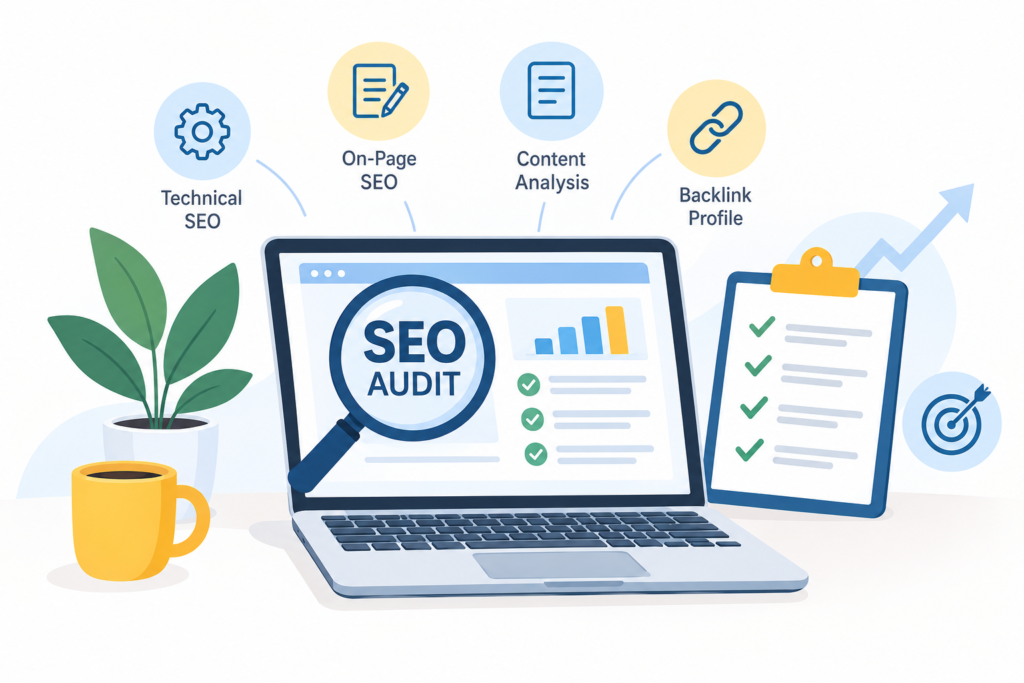
What Should Businesses Look for in SEO Audit Services?
The right SEO Audit Services should cover multiple areas of website performance. A basic checklist is not always enough because SEO problems can exist across technical, content, and off-page elements.
1. Technical Website Analysis
Search visibility is built on technical SEO. Your audit should check website speed, mobile responsiveness, crawlability, indexability, XML sitemaps, robots.txt, redirects, broken pages, HTTPS security, and URL structure.
Technical issues may make it difficult for search engines to find and comprehend crucial pages. Fixing these issues can create a stronger foundation for future SEO work.
2. On-Page SEO Review
Effective SEO Audit Services should examine the optimization of individual pages. Important elements include title tags, meta descriptions, headings, keyword placement, image alt text, internal links, URLs, and content structure.
The audit should also identify pages that target similar keywords or fail to satisfy search intent. You may increase the usefulness of your website for both users and search engines by making these improvements.
3. Content Quality Evaluation
Content is another important part of SEO Audit Services. Businesses should determine whether their existing content is useful, relevant, original, updated, and aligned with customer search intent.
An audit can identify thin content, outdated articles, duplicate pages, missing topics, and content that receives little organic traffic.
Instead of creating large amounts of unnecessary content, companies can focus on improving pages that have genuine ranking and conversion potential.
4. Backlink and Off-Page Analysis
A strong backlink profile can support website authority, while harmful or irrelevant links may create potential risks.
Professional SEO Audit Services should review referring domains, backlink quality, anchor text, lost links, and potentially harmful links. Competitor backlink analysis can also reveal opportunities that your website has not yet targeted.
How to Pick the Best Services for SEO Audits
Companies should compare SEO Audit Services based on the depth of analysis rather than simply choosing the cheapest option.
Look for an audit that provides clear findings, evidence, priorities, and actionable recommendations. A useful report should explain not only what is wrong but also why the issue matters and how it can be improved.
Check the Agency’s Audit Process
Ask potential agencies what their SEO Audit Services include. A reliable provider should have a structured process covering technical SEO, on-page SEO, content, backlinks, competitors, and search performance.
Avoid providers that offer vague reports filled with generic recommendations. Your website needs a customized analysis based on its industry, audience, competition, and current performance.
Review the Final Deliverables
The best SEO Audit Services should provide a practical report that your team can understand and use.
Look for prioritized recommendations, explanations of major problems, keyword opportunities, technical findings, content suggestions, and a clear action plan. This makes it easier to measure progress after the SEO campaign begins.
Advantages of Employing SEO Audit Services Prior to Hiring an Agency
Using SEO Audit Services before hiring an agency can provide several important benefits. Businesses can understand their current SEO position, identify expensive problems early, prioritize high-impact improvements, and compare agencies more confidently.
An audit can also help companies avoid paying for services they do not currently need. Instead of accepting a one-size-fits-all package, you can choose an SEO strategy based on actual website requirements.
Most importantly, an SEO audit creates a measurable starting point. Future improvements can be compared against the initial findings to determine whether the campaign is producing meaningful progress.
Final Thoughts on SEO Audit Services
Choosing an SEO agency without first understanding your website can be a risky decision. SEO Audit Services give companies valuable insights into technical issues, content gaps, keyword opportunities, backlinks, and competitive weaknesses.
Before signing a long-term contract, request a comprehensive audit and review the recommendations carefully. The right SEO Audit Services can turn uncertainty into a clear SEO roadmap and help your business make a smarter, more confident investment in organic growth.
https://www.instagram.com/smartdigiexpert?stkn=eHdnM2djNGNieTky