
In today’s competitive digital world, simply having a website isn’t enough. If your target audience can’t find you on search engines, you’re missing valuable opportunities to attract potential customers. Search Engine Optimization (SEO) remains one of the most effective and cost-efficient ways to increase website traffic and generate quality leads.
Organic traffic refers to visitors who find your website through unpaid search engine results. Unlike paid advertising, organic traffic provides long-term value and builds credibility for your business.
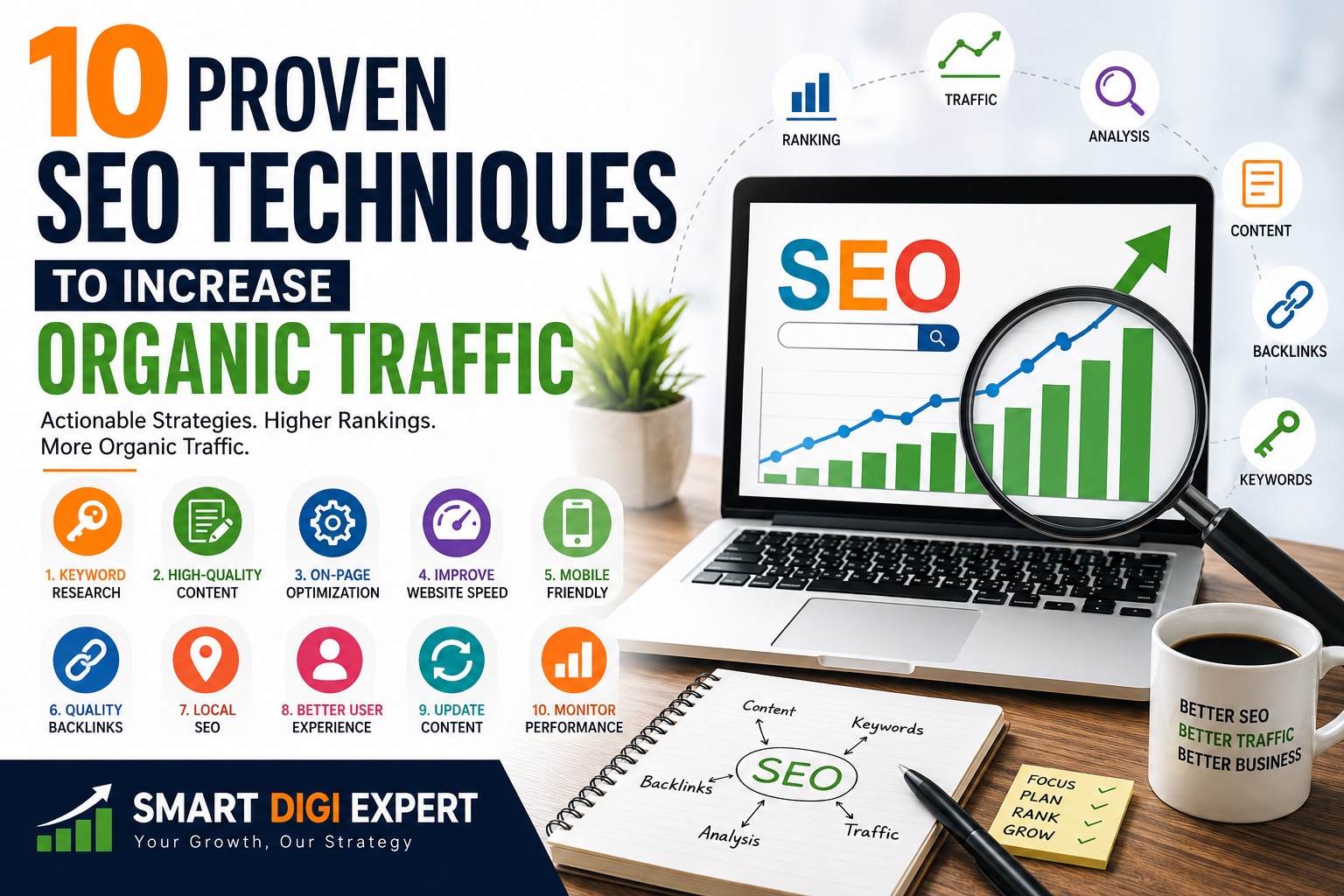
In this guide, we’ll explore 10 proven SEO techniques that can help you improve your rankings, drive more organic traffic, and grow your online presence.
1. Perform Thorough Keyword Research
Every successful SEO strategy starts with keyword research. Understanding what your audience is searching for helps you create content that matches their needs.
When conducting keyword research, focus on:
- High-search-volume keywords
- Long-tail keywords
- Low-competition opportunities
- Local search terms
- User search intent
Use keyword research tools to identify phrases your potential customers use before making purchasing decisions.
Example Keywords
- SEO services
- Digital marketing agency
- Local SEO services
- Website optimization
- Organic traffic growth
2. Create High-Quality Content
Search engines prioritize helpful, informative, and original content that provides genuine value to users.
Your content should:
- Answer common customer questions
- Solve real problems
- Include actionable advice
- Be easy to read
- Stay updated with current information
Instead of writing for search engines, write for people. Valuable content naturally earns backlinks, social shares, and higher rankings.
3. Optimize On-Page SEO
On-page SEO ensures that search engines can understand your content while improving the user experience.
Optimize the following elements:
- SEO-friendly page titles
- Meta descriptions
- Header tags (H1, H2, H3)
- Image alt text
- Internal links
- URL structure
- Keyword placement
- Schema markup where appropriate
Avoid keyword stuffing. Use your target keyword naturally throughout the article.
4. Improve Website Speed
Website speed directly affects user experience and search rankings.
A slow website can increase bounce rates and reduce conversions.
Ways to improve speed include:
- Compress images
- Enable browser caching
- Minify CSS and JavaScript
- Use a Content Delivery Network (CDN)
- Choose reliable hosting
- Remove unnecessary plugins
A fast-loading website keeps visitors engaged and improves overall SEO performance.
5. Make Your Website Mobile-Friendly
Most users browse websites using mobile devices. Search engines prioritize mobile-friendly websites because they offer a better experience.
Ensure your website has:
- Responsive design
- Easy navigation
- Readable text
- Clickable buttons
- Fast mobile loading speed
Test your website regularly on different devices to ensure consistent performance.
6. Build High-Quality Backlinks
Backlinks remain one of the strongest ranking factors.
Quality matters far more than quantity.
Effective backlink strategies include:
- Guest blogging
- Publishing original research
- Creating valuable resources
- Digital PR
- Industry partnerships
- Shareable infographics
Avoid buying backlinks or using spammy link-building techniques, as these can harm your website’s rankings.
7. Optimize for Local SEO
If your business serves a specific geographic area, local SEO is essential.
Improve local visibility by:
- Optimizing your Google Business Profile
- Collecting customer reviews
- Adding location-specific keywords
- Building local citations
- Creating local landing pages
Local SEO helps your business appear in nearby searches and map results, increasing qualified traffic.
8. Improve User Experience (UX)
Search engines reward websites that provide excellent user experiences.
Focus on:
- Simple navigation
- Clear calls to action
- Logical site structure
- Readable typography
- Accessible design
- Low bounce rates
When users stay longer on your website and engage with your content, search engines receive positive signals about its quality.
9. Update Existing Content Regularly
SEO isn’t a one-time effort.
Refreshing older content can significantly improve rankings.
Update your content by:
- Adding new statistics
- Removing outdated information
- Improving readability
- Including recent examples
- Optimizing keywords
- Adding internal links
Search engines favor content that remains relevant and up to date.
10. Monitor SEO Performance
Tracking your SEO efforts helps you identify what’s working and where improvements are needed.
Monitor key metrics such as:
- Organic traffic
- Keyword rankings
- Bounce rate
- Conversion rate
- Click-through rate (CTR)
- Backlinks
- Page load speed
Regular analysis allows you to refine your strategy and achieve better long-term results.
Common SEO Mistakes to Avoid
Many businesses unknowingly hurt their rankings by making avoidable mistakes.
Avoid:
- Keyword stuffing
- Duplicate content
- Broken links
- Slow-loading pages
- Ignoring mobile optimization
- Poor internal linking
- Thin or low-quality content
- Neglecting technical SEO
Fixing these issues can have a significant impact on your search visibility.
Benefits of Organic Traffic
Investing in SEO provides long-term advantages, including:
- Increased website visibility
- Higher-quality leads
- Better brand credibility
- Lower customer acquisition costs
- Sustainable traffic growth
- Improved user experience
- Higher conversion potential
Unlike paid advertising, organic traffic continues to generate value long after your content is published.
SEO Best Practices for 2026
To stay competitive, businesses should:
- Publish high-quality, people-first content.
- Focus on search intent rather than keyword density.
- Build trust through expertise and accuracy.
- Optimize for mobile users.
- Improve page speed and technical SEO.
- Earn quality backlinks naturally.
- Keep content updated and relevant.
- Use analytics to guide SEO decisions.
Conclusion
SEO is one of the most powerful digital marketing strategies for driving consistent, long-term organic traffic. By implementing these proven techniques—from keyword research and high-quality content to technical optimization and user experience improvements—you can improve your search rankings and attract more qualified visitors to your website.
Remember that SEO is a continuous process. Regular updates, performance monitoring, and adapting to search engine changes are essential for maintaining and improving your rankings over time.
If you’re looking to grow your business through effective SEO strategies, investing in a well-planned optimization approach today can deliver lasting results tomorrow.